

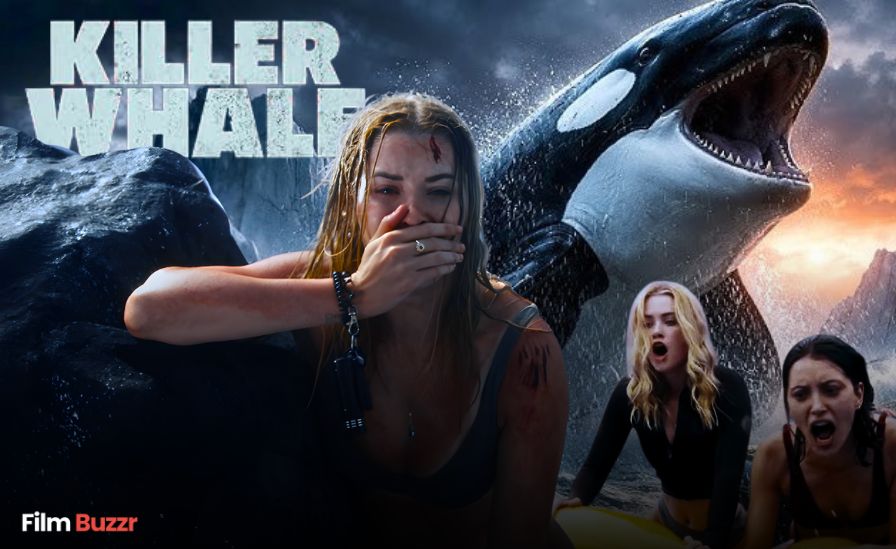

The survival-horror genre has long thrived on the primal fear of nature turned hostile — from sharks (Jaws) to deep-sea terror flicks (47 Meters Down). Killer Whale, directed by Jo-Anne Brechin, enters this lineup with a strikingly modern twist: a film that ties predatory danger to the consequences of animal captivity. Despite its intriguing premise and committed performances, the feature stumbles under the weight of its own thematic ambitions.
Released on January 16, 2026 in theaters and digital platforms via Lionsgate, the movie stars Virginia Gardner, Mel Jarnson, and Mitchell Hope in a tense story where escape isn’t just from a killer whale, but from the emotional trauma tied to its captivity.
Plot Overview: Paradise Lost to a Fearsome Lagoon
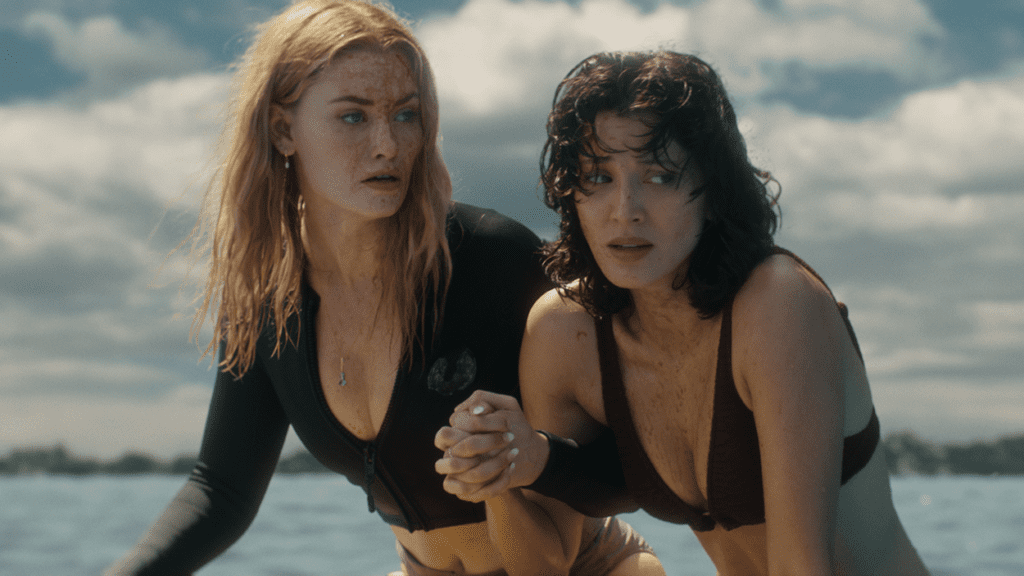
Maddie (Virginia Gardner) grapples with grief after an earlier tragedy, and her best friend Trish (Mel Jarnson) plans a tropical getaway to lift her spirits. Their destination — a secluded private lagoon in Thailand — quickly turns nightmarish when Ceto, a killer whale that escaped from captivity after killing a trainer, begins to stalk them. Along with an expat named Josh (Mitchell Hope), the group must survive a closing circle of water and the vengeance-driven orca that views them as both trespassers and reminders of past abuses.
Cast & Crew: Solid Performances Amid Familiar Tropes
- Virginia Gardner delivers a grounded portrayal of Maddie’s psychological unraveling.
- Mel Jarnson shines as the optimistic scientist friend, providing both humor and heart.
- Mitchell Hope rounds out the trio with steady support, grounding the film’s ensemble dynamics.
Director Jo-Anne Brechin co-wrote the script with Katharine McPhee, aiming to merge personal trauma with creature feature thrills — an intriguing but uneven combination.
Themes: Animal Captivity as Central Conflict
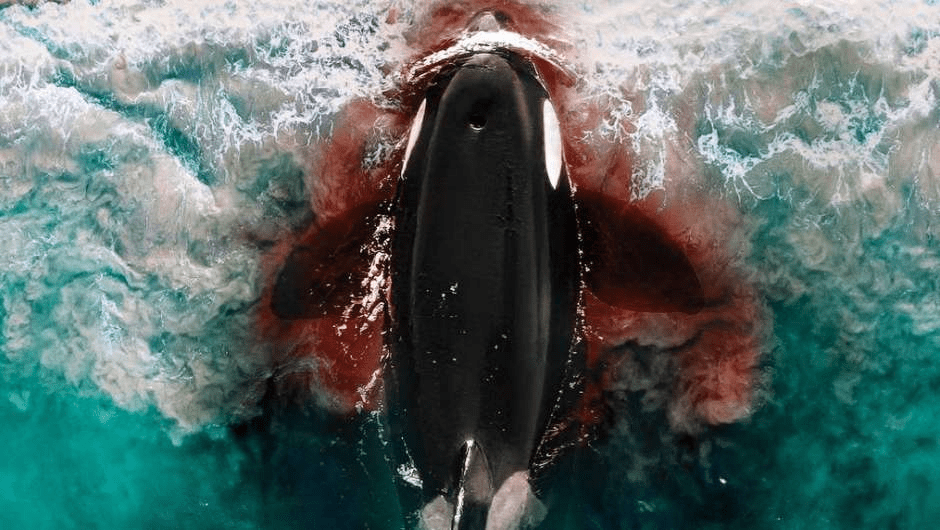
What sets Killer Whale apart in concept is its focus on animal captivity as more than a backdrop — it’s the emotional core of the conflict. Ceto doesn’t act as a random predator but as a creature shaped by human interference and suffering. The intent is to subvert typical horror antagonism, inviting audiences to question who the real villain is: the whale or the system that bred and confined her.
While this thematic ambition is admirable, it often drains rather than heightens the survival horror tension. Instead of pure adrenaline, what emerges is an ethical quandary that slows pacing and diffuses fear. Instead of simply running from danger, viewers are nudged to ponder culpability and consequence — important, but tonally at odds with the visceral thrills that audiences expect.
Tone & Pacing: A Creature Feature That Hesitates
At its best, Killer Whale channels a classic creature flick energy reminiscent of The Shallows or Crawl — isolated protagonists, confined environments, and escalating peril. The lush lagoon setting and natural beauty sharply contrast with the threat beneath the surface, creating moments of tense immersion.
However, critics have pointed out that the film too often feels like a retread of familiar tropes, with predictable beats that mirror past sea-based horror films. Some action sequences lean on green screen effects that fail to fully sell peril, weakening the cinematic impact.
Visuals & Sound: Making Waves, Not Ripples
Technically, the cinematography captures both serenity and danger beautifully — azure waters, distant horizons, and murky depths all support the film’s atmospheric aims. Composer Angela Little crafts a score that heightens unease, and editor Ahmad Halimi’s cuts often place the audience right alongside the protagonists’ fear.
Where the visuals falter is in the CGI presence of Ceto, which sometimes undermines tension when it looks artificial rather than menacing. The sound design, however, does its job of amplifying splashes, cries, and silence with effectiveness that supports immersion even when the plot drags.
Message & Cultural Context
Killer Whale’s ambition to spotlight animal captivity as an ethical concern deserves recognition. Real-world discussions about captive orcas have intensified in recent years, especially following documentaries and activism questioning marine park practices. Integrating such discourse into a horror framework challenges viewers to reflect on entertainment versus empathy.
But here lies the film’s central conflict: horror thrives on fear and suspense, and when moral lessons take precedence, the momentum toward terror can falter — a tension Killer Whale never quite resolves.
A Thoughtful Concept That Struggles to Thrill
Killer Whale boasts strong performances and a compelling ethical angle, but its survival-horror impact is diluted by thematic weight and familiar genre beats. While the movie raises important questions about human treatment of animals, this message sometimes comes at the expense of building sustained fear and excitement.
Verdict: ⭐⭐⭐☆☆ (3/5) – Killer Whale is intriguing and occasionally effective, but too often the captivity theme overwhelms the creature feature thrills it aims to deliver.