
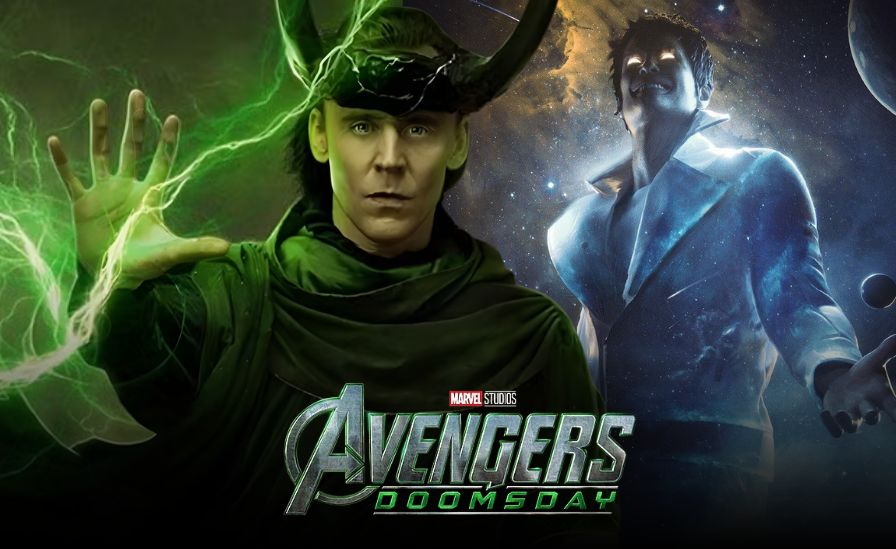

The Marvel Cinematic Universe has never shied away from bold adaptation, but the latest rumor is perhaps its most ambitious narrative pivot yet. According to insider reports, Loki, the God of Mischief, is set to take the place of the Beyonders in Avengers: Doomsday. If true, this move would fundamentally reshape one of Marvel Comics’ most cataclysmic events for the screen, replacing cosmic abstract entities with a fan-favorite character whose journey has prepared him for this moment.
For fans, this raises thrilling questions: How could a reformed Loki stand in for multiversal destroyers? What does this mean for the Avengers’ greatest threat? And is this the ultimate destiny of the MCU’s most evolved character? Let’s untangle the threads of time, power, and narrative potential behind this game-changing rumor.
Who Are the Beyonders? (And Why They’re a Problem for Film)

To understand the scale of this change, we must first look at the source material. In the 2015 comics event Secret Wars, the Beyonders are near-omnipotent, extradimensional beings who exist outside the Multiverse. Their sole purpose? To systematically destroy every universe in existence as a form of cosmic experiment. They are less “villains” and more unstoppable forces of nature—the reason for the incursions that collapsed reality.
Why The MCU Would Change Them:
- Narrative Accessibility: The Beyonders are profoundly abstract. For a general audience, replacing them with a known, emotionally complex character like Loki creates immediate stakes and understanding.
- Character Payoff: Loki’s arc—from villain to variant to He Who Remains’ successor—has uniquely positioned him as the guardian of the “Sacred Timeline.” Having him confront or even become a similar cosmic threat is a logical, dramatic endpoint.
- Actor Availability & Popularity: Tom Hiddleston’s Loki is one of the MCU’s pillars. Leveraging his star power and the character’s deep history makes more sense than introducing new, cold cosmic entities.
Loki’s Path to God Emperor: How His Journey Sets This Up
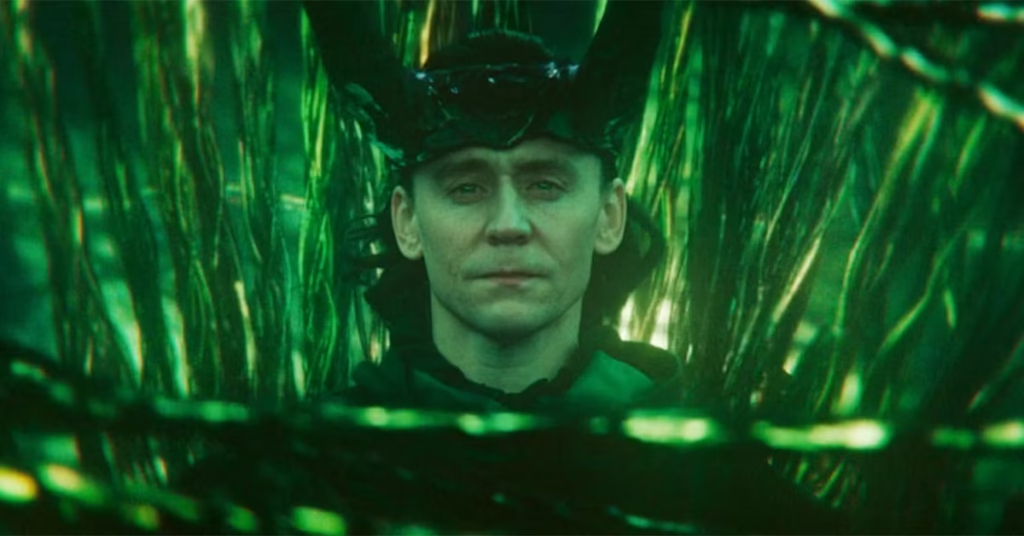
Loki’s evolution in the Loki series on Disney+ is the crucial groundwork for this massive role.
- From God of Mischief to God of Stories: The season 2 finale didn’t just show Loki mastering time; it showed him sacrificing his own happiness to physically hold the Multiverse together. He is no longer a trickster, but a benevolent architect.
- The Power Scale: He now wields power comparable to He Who Remains and Kang the Conqueror. He can perceive, navigate, and sustain all timelines. This puts him on a level where influencing or causing an “incursion-level” event is plausible.
- The Moral Dilemma: A key theme of Avengers: Doomsday is the ethical cost of saving existence. Would a “good” Loki make a terrible choice to prevent something worse? This is the perfect internal conflict for a character defined by duality.
The “Doomsday” Scenario: How Loki Could Fit In
How might this play out on screen? Here are the most compelling theories:
Scenario 1: Loki as the Catalyst
Instead of Beyonder experiments causing incursions, it could be a fracture in Loki’s hold on the Multiverse. Perhaps maintaining the timelines has a corrupting effect, or an external force (like Kang) attacks his position at the End of Time, causing reality to splinter. The Avengers would then have to confront not a villain, but a fallen friend whose power is now the problem.
Scenario 2: Loki as the Reluctant Antagonist
In this take, Loki might see the only way to save the core Sacred Timeline is to actively prune or destroy branching realities—mirroring the Beyonders’ destructive experimentation. He becomes a well-intentioned extremist, forcing the Avengers to fight the very being trying to save them.
Scenario 3: Loki as the New “One Who Remains”
This aligns closely with his current role. The Avengers, desperate to stop the incursions, may journey to the End of Time to find him. He could be the one to explain the rules of the conflict and present them with an impossible Sophie’s Choice, acting as a guide rather than a direct foe.
The Ripple Effect: What This Means for the MCU
This decision would send shockwaves through the franchise:
- Elevates Loki’s Saga: It makes his Disney+ series not a side-quest, but the secret backbone of the Multiverse Saga.
- Redefines the Avengers’ Threat: The final battle becomes emotionally personal (“We have to fight Loki”) rather than physically abstract (“We have to fight the Beyonders”).
- Connects to Kang: This provides a clean link between Kang’s war and Loki’s stewardship. Were the Beyonders/Kangs all trying to prevent or control what Loki has now become?
- Creates a Moral Gray Area: The film could explore profound themes about the burden of godhood, sacrifice, and whether some universes are “meant” to die—elevating it beyond a standard superhero showdown.
Fan Theories & Lingering Questions
The rumor mill is buzzing with speculation. Key questions include:
- Will this be Tom Hiddleston’s final act? This would be a monumental, tragic, and fitting end for his decade-plus journey.
- How does Doctor Strange fit in? As the other multiversal guardian, Strange’s dynamic with a god-like Loki would be electric.
- What about the “Avengers: Secret Wars” setup? Doomsday is meant to lead directly into Secret Wars. Loki’s role could create the Battleworld scenario, where he is the crumbling “god” of a patched-together reality.
The Glorious Purpose Fulfilled
Loki’s first famous lie in the MCU was his claim to a “glorious purpose.” This potential storyline represents the terrifying, magnificent truth of that statement. Replacing the Beyonders with Loki isn’t a simplification—it’s a masterstroke of character-driven storytelling. It transforms a cosmic event into a human (well, Asgardian) tragedy, ensuring that Avengers: Doomsday hits with emotional weight worthy of its world-ending scale.
If the reports are true, the God of Mischief is no longer just playing a role in the Multiverse Saga. He may have become its very foundation—and its ultimate crisis.
What do you think? Is Loki replacing the Beyonders a brilliant move or a step too far? Share your theories in the comments below.
For more exclusive Marvel analysis, deep dives, and confirmed MCU news, make sure to follow FilmBuzzr.