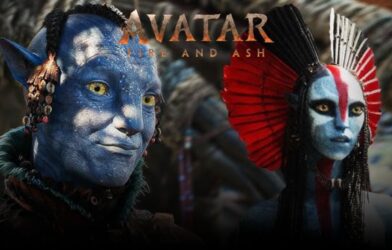

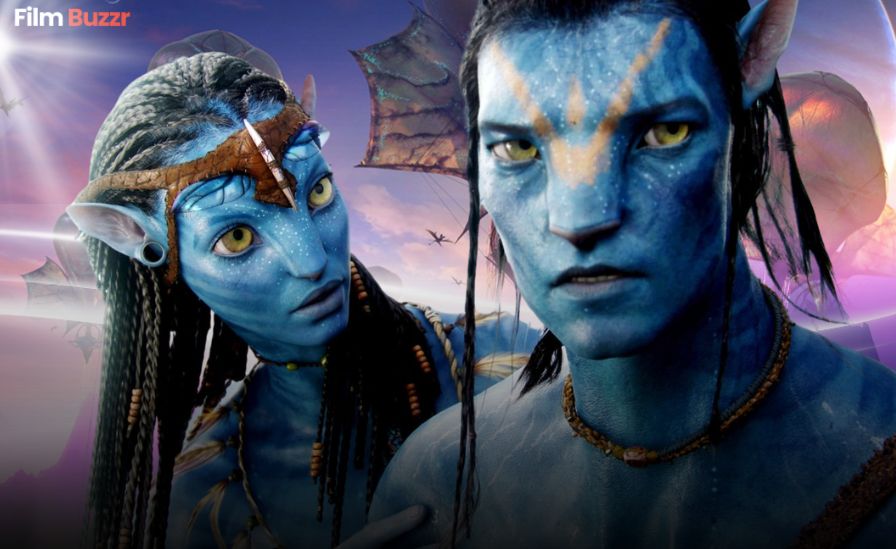

When Avatar first arrived in 2009, it redefined what blockbuster cinema could look like. Thirteen years later, Avatar: The Way of Water proved that James Cameron hadn’t lost his touch — visually, at least. Now, with Avatar 3, the question is no longer about technology or box office dominance.
The real question is simpler, yet far more important:
Does Pandora still feel magical — or has familiarity dulled its wonder?
Avatar 3 attempts to answer that by pushing the franchise into darker emotional territory, expanding its world, and challenging the very idea of who the Na’vi are.
A Darker, More Emotional Chapter
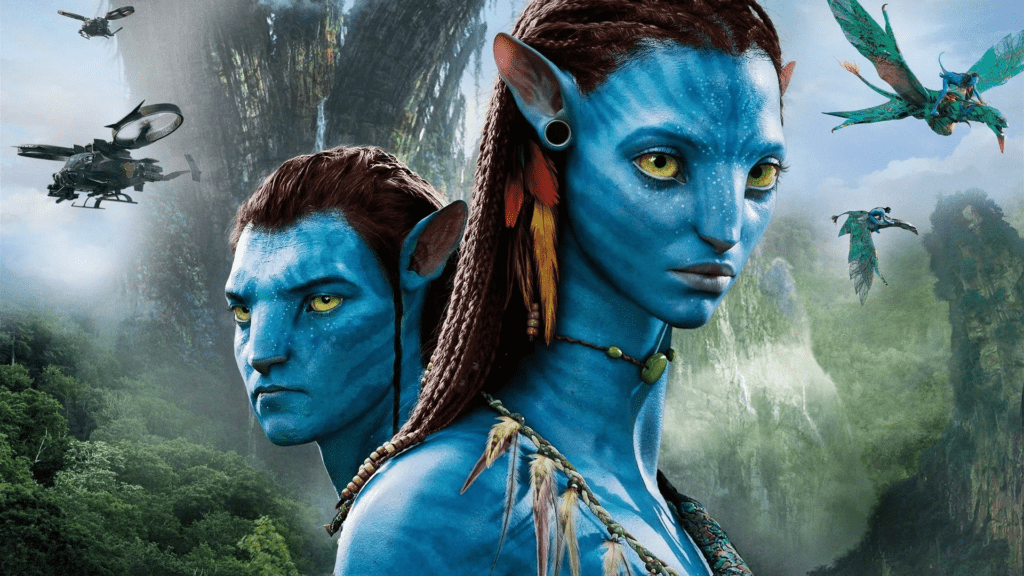
Unlike its predecessors, Avatar 3 is not primarily about discovery. Pandora is no longer new to us — and the film knows it.
Instead, this chapter focuses on conflict within Pandora itself. James Cameron has previously hinted that Avatar 3 would introduce morally complex Na’vi clans, and that promise shapes the film’s tone from the opening act.
This time, the threat isn’t just human colonization. It’s ideology, division, and survival in a world that no longer feels united.
As a result, Avatar 3 feels:
- More intimate
- More emotionally charged
- Less awe-driven, more character-driven
This shift won’t please everyone, but it is undeniably intentional.
Pandora Still Looks Stunning — But Now It Feels Different

Visually, Avatar 3 is breathtaking. That much is expected.
However, the magic doesn’t come from novelty anymore. Instead, it comes from scale and contrast.
Cameron introduces new regions of Pandora that feel harsher, less spiritual, and more volatile than anything we’ve seen before. Fire, ash, and broken ecosystems replace lush forests and glowing seas, subtly reinforcing the film’s themes.
Pandora hasn’t lost its beauty — but it has lost its innocence.
That change is crucial. The film understands that repeating visual wonder without narrative evolution would feel hollow. Instead, it allows the environment to reflect the story’s growing complexity.
Stronger Character Focus (Finally)
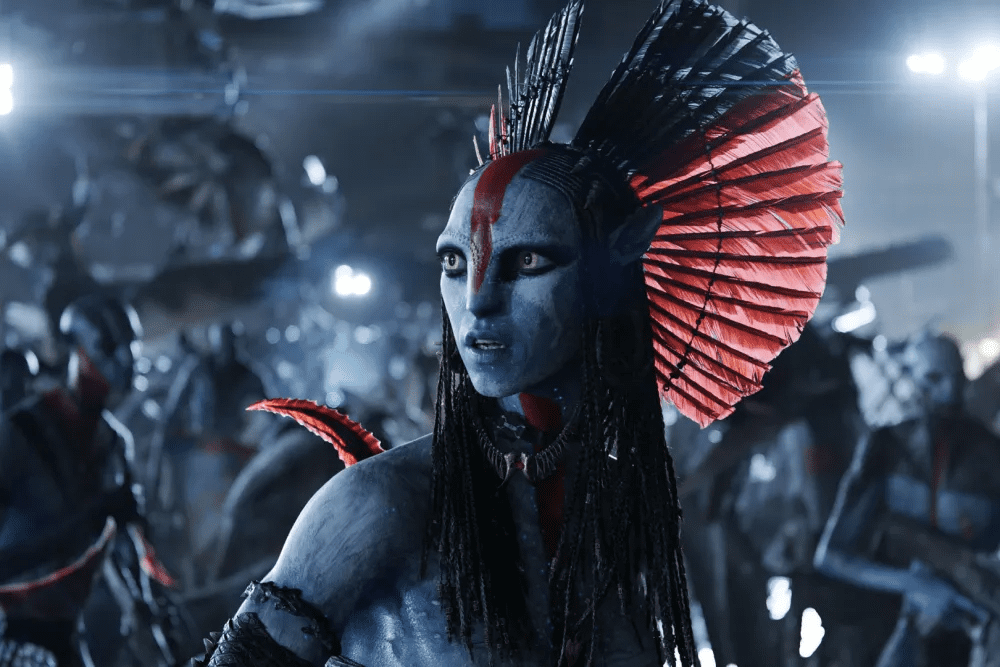
One of the long-standing criticisms of the Avatar franchise has been its characters. While visually iconic, many felt emotionally distant in earlier installments.
Avatar 3 directly addresses that weakness.
Jake Sully is no longer the emotional center alone. The film gives significant weight to:
- Neytiri’s internal struggle
- The next generation of Na’vi
- Characters wrestling with loyalty versus survival
Rather than positioning characters as symbols, the film treats them as flawed individuals shaped by loss, anger, and fear.
This makes Avatar 3 the most character-driven entry in the series so far.
Conflict That Feels Personal, Not Just Spectacular
Unlike the clear-cut morality of earlier films, Avatar 3 thrives in moral gray areas.
Not all Na’vi agree on what Pandora should become. Some believe coexistence is impossible. Others see adaptation as the only path forward.
This internal conflict gives the film weight. Battles aren’t just spectacles — they’re ideological clashes.
As a result, action scenes feel:
- More grounded
- More consequential
- Less repetitive
You’re not just watching things explode. You’re watching beliefs collide.
Pacing: Ambitious but Uneven
At nearly three hours, Avatar 3 continues Cameron’s love for epic runtimes. While much of the film is engaging, the pacing does occasionally suffer.
The middle act, in particular, lingers longer than necessary on world-building moments that, while visually impressive, slow narrative momentum.
That said, the final act justifies much of that buildup. Emotional payoffs land with real impact, and the film closes on a note that feels both unsettling and purposeful.
Avatar 3 demands patience — but it mostly rewards it.
Themes: Evolution, Identity, and Survival
More than any previous entry, Avatar 3 feels thematically rich.
Key themes include:
- Cultural identity under threat
- The cost of survival
- The danger of ideological purity
- What it means to belong
Rather than repeating environmental messages alone, the film explores how communities fracture under pressure — a theme that resonates strongly with modern audiences.
Pandora becomes less of a fantasy world and more of a mirror.
How Avatar 3 Compares to the Previous Films
In many ways, Avatar 3 is the franchise’s most mature chapter.
- Less reliant on visual novelty than Avatar (2009)
- More emotionally layered than The Way of Water
- Riskier in tone and theme
However, it may also be the least accessible. Viewers expecting constant spectacle or simple good-vs-evil storytelling might feel challenged.
This is not Avatar at its safest — it’s Avatar evolving.
Does Pandora Still Feel Magical?
The answer depends on what you define as “magic.”
If magic means discovery, glowing landscapes, and visual shock — that feeling has naturally faded.
But if magic means:
- Emotional immersion
- Thought-provoking world-building
- A universe that grows rather than repeats
…then yes, Pandora still feels magical — just in a different way.
Avatar 3 understands that wonder doesn’t come from repetition. It comes from change.
Avatar 3 is not the most visually shocking entry in the franchise — but it may be the most meaningful.
James Cameron trades some spectacle for substance, offering a film that challenges its audience rather than simply dazzling it. While pacing issues and a heavy runtime may test patience, the emotional depth and thematic ambition make this a worthy continuation of the saga.
Pandora hasn’t lost its magic.
It has simply grown up.
Rating
★★★★☆ (4/5)
Visually stunning, emotionally richer, and thematically ambitious — even if not always perfectly paced.
Stay tuned With Filmbuzzr for more interesting reviews.